
Your truck sits higher. Where do its low beams land?
A lift changes the truck you see in the driveway. Before its first night drive, give the headlamps their own check. A wheel-alignment result says nothing about where the low beams land: the suspension settings and the lamps' vertical aim are separate adjustments.
This is a practical distinction in the equipment instructions. For its 1999–2006 Chevy/GM 1500 1.5–2-inch kit, Rough Country's installation guide calls for headlamp adjustment after installation and separately requires a front-end alignment check. That document applies to that kit; it is a reason to look for both operations in your own kit's instructions, not a specification for every lifted pickup.
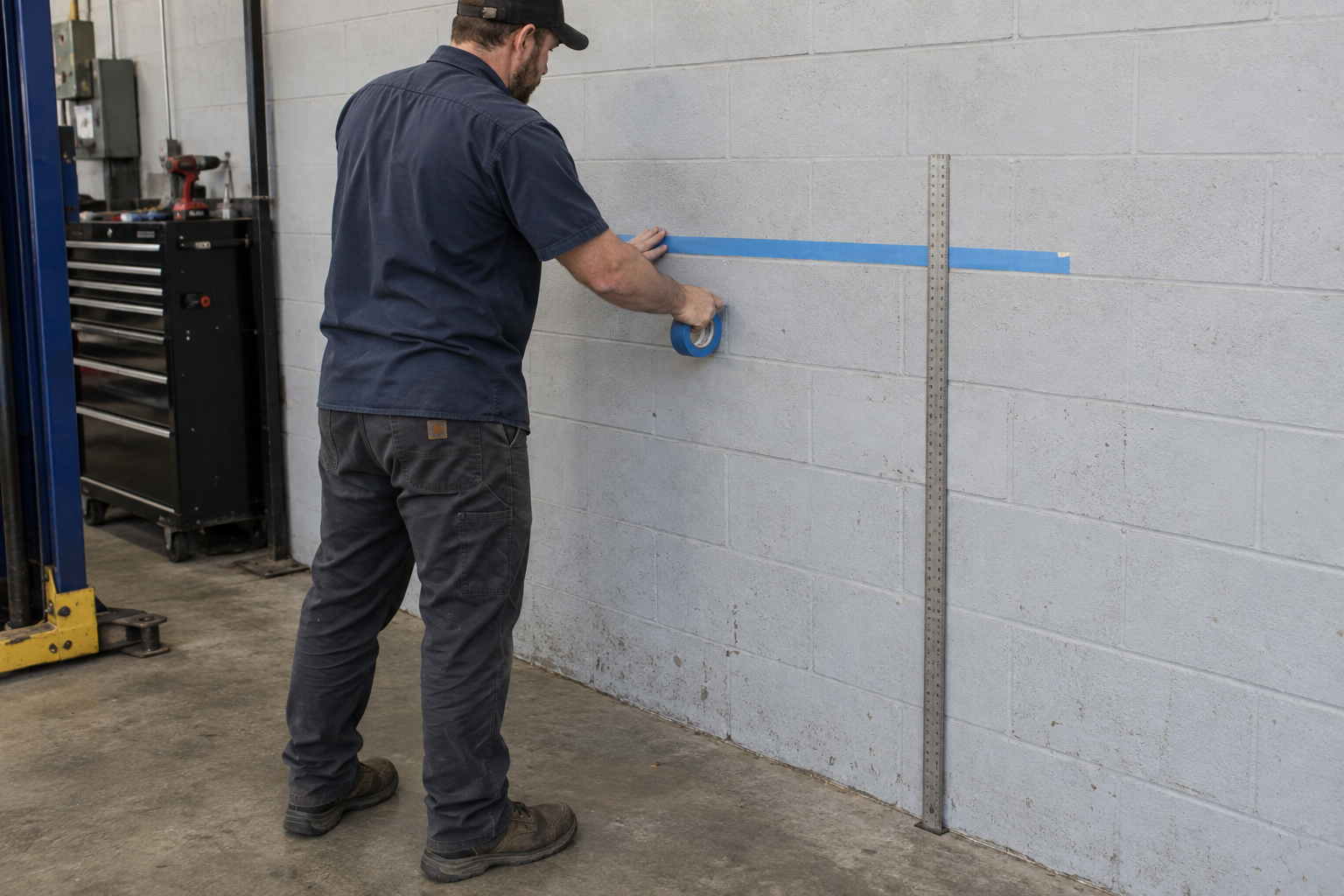
The starting reference belongs to the truck in front of you. In its 2024 F-150 headlamp instructions, Ford describes a level surface, a wall or screen about 25 feet away, and a horizontal reference made from the measured lamp-center height. The wall mark comes from a measurement, rather than the old height of the truck or the bumper's appearance.
One wall, different aiming instructions
Do not turn that example into a universal “drop the beam two inches” rule. The same Ford procedure identifies a particular edge of the light pattern and relates it to the reference line. It also distinguishes the adjusters for two LED headlamp versions. Use the instructions that match the vehicle and the lamps actually installed; a different assembly needs its own confirmed procedure.
A marked wall makes the setup visible, but the tape alone does not establish correct aim. The floor must meet the procedure's conditions, the truck must be positioned at the stated distance, and the reference must be measured at the specified point on the lamp. Follow any preparation and loading instructions for the exact vehicle. If you cannot identify the lamp or establish the setup, have the installer perform the check with suitable aiming equipment.
Loading is another reason to keep the setup specific. In a 1992 explanation of headlamp glare, NHTSA noted that vehicle loading and replacement headlamps can change aim. That historical observation does not provide today's adjustment specification. It does explain why a check made in one configuration should not be treated as proof for every later equipment or loading change.
After suspension work, ask the installer to confirm which headlamp procedure was used and whether adjustment was needed. Keep that answer with the lift-kit instructions. If the beam looks wrong afterward, return for a check instead of guessing at the adjuster or fitting brighter bulbs. The useful result is a verified low-beam pattern for the completed truck, alongside its wheel alignment.