
A portable booster still needs the right rear seat
A pickup can have room for luggage, tools and a wide rear bench yet still need a careful seating check before carrying a child. The useful question is not whether a portable booster fits in the cab when folded. It is whether the child, the exact booster and the intended passenger position work together according to both manufacturers' instructions.
Make that check before the truck is loaded. Open the rear door, identify the position you intend to use and have the vehicle handbook beside the booster instructions. A short trial at home gives you time to find a missing manual, ask a specific question or arrange a different vehicle. Discovering the uncertainty at the departure point makes all three harder.
Start with the child and the exact equipment
A booster is not the next step simply because it packs smaller than the child's current restraint. Follow the current restraint's instructions and the child's applicable height, weight and developmental requirements. NHTSA's booster-seat guidance calls for reading both the vehicle and booster manuals and using a suitable rear seating position with a lap-and-shoulder belt. The child must also be able to stay properly seated throughout the journey.
The compact form of a mifold booster can be useful when moving between vehicles, but it does not settle whether a particular rear seat is suitable. Check the model identifier and the instructions supplied for that exact version. A review of a similarly named product, or a picture of one sitting on a broad bench, cannot answer a question about your truck's belt system.
The manufacturer's current support information illustrates why exact identification matters: its advice about certain inflatable belts names specific booster versions and vehicle belt systems. Do not turn that limited guidance into approval for every model. For use in another country, also confirm that the exact restraint is approved for that destination; a familiar brand name is not evidence of interchangeable market versions.
| Identify before the trial | Where the answer should come from |
|---|---|
| The child's permitted restraint stage and limits | The current and proposed restraint instructions, with qualified help where needed |
| The exact booster model and market version | Its permanent label and matching manufacturer manual |
| The intended rear seating position | The handbook for the pickup's model year and cab configuration |
| An unusual belt, buckle or head-restraint arrangement | Both manufacturers' specific instructions or direct clarification |
Keep those answers together. A saved manual with its model name is more useful than an unlabelled screenshot. If two instructions seem inconsistent, stop the trial and ask the manufacturer or a qualified child passenger safety technician to resolve the particular combination.
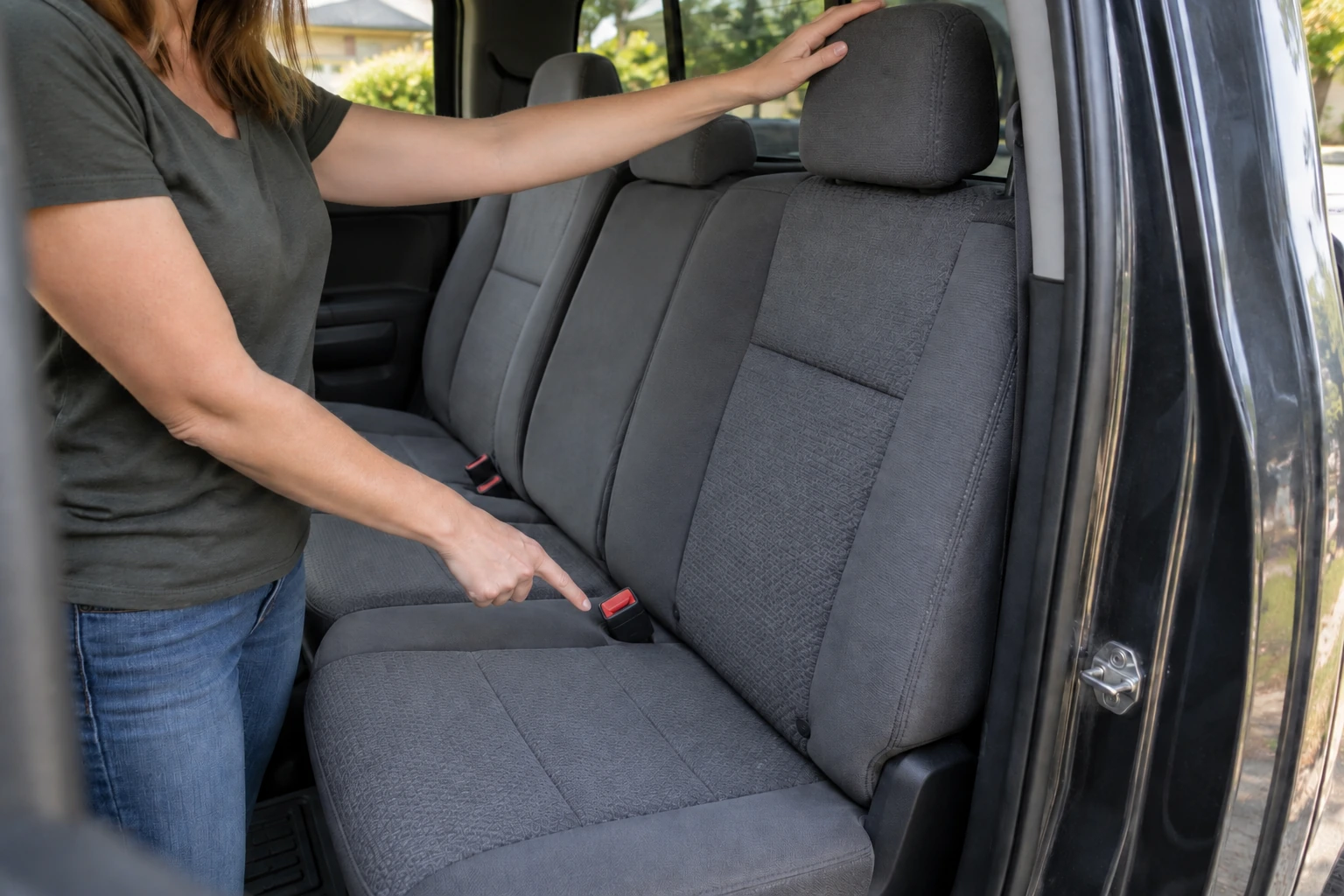
Check the position with the cab arranged for the trip
Set the cab up as it will actually be used. Move the front seat to the adult driver's or passenger's normal position, return any folding rear seat to its proper passenger configuration and clear the place intended for the child. Check the booster in that arrangement, following the relevant manuals; moving everything out of the way for a photograph would hide the space problem you need to solve.
Look at the specified belt route, the buckle's accessibility and the support required for the child's head and the booster. Never substitute a lap-only belt where a lap-and-shoulder belt is required. Do not put the shoulder belt behind the child's back or under an arm to make an awkward fit look tidier. If the permitted fit cannot be achieved, choose another approved seating arrangement.
Cab accessories deserve a separate look. A loose organizer, a tool bag or something stored across the rear bench should not be treated as part of the restraint setup. Remove obstacles from the passenger position and secure carried items according to the vehicle handbook. The fact that an accessory is sold for pickups does not make it suitable beside every child restraint.
After the seating check, decide where the bags and equipment will travel. Our separate guide to an accessory payload budget covers the truck's carried load; it does not establish booster compatibility. Both questions need their own answer.
Leave the final decision until you have checked the real combination, but do the checking early enough to change it. The useful result is a known seating arrangement and the correct instructions ready for whoever drives, not merely a small booster packed somewhere in a large truck.